What counts as “Employed” for the PR Work Experience Points?
When applying for a skilled visa in Australia, claiming points for work experience can give your application a powerful boost — but not all work counts. To be eligible, your employment must meet specific criteria. In this article, we will break down what “employed” really means under the PR points test, so you can avoid common pitfalls and maximise your claim.

  1. Eligible Work Experience
    You can claim points for skilled employment (in your nominated or closely related occupation) completed in the 10 years before your invitation to apply. Both Australian and overseas experience count, but they are assessed separately. You cannot combine partial periods from both to meet a threshold.
  2. Australian vs Overseas Experience
  • Australian experience earns more points due to its relevance to the local job market.
  • Work in Australia must be done while holding a valid visa with work rights.
  • Offshore work for an Australian company may count as Australian experience if done in Australian waters or territories.
  1. Things to be considered as “Employed”
  • You must work at least 20 hours per week, paid (not voluntary or stipend-based).
  • Casual, shift, or FIFO work can count if it averages 20 hours/week.
  • Only paid leave counts toward employment duration.
  1. Skilled Employment Criteria
  • Work must be at a skilled level, supported by a skills assessment and aligned with ANZSCO codes.
  • Decision-makers consider the skills assessing authority’s opinion, ANZSCO duties, and supporting documents.
  • For doctors and lawyers, specific registrations or admissions can serve as skills assessments.
  1. Closely Related Occupations
  • Must fall within the same ANZSCO unit group (e.g., different types of accountants).
  • Career progression (e.g., from engineer to engineering manager) may be accepted even if outside the unit group, if it follows a logical advancement path.
  1. Unlawful Employment
  • Work done without proper visa work rights (e.g., breaching student visa work limits) cannot be counted for points.
Read more

From Zero to 21K: How I Became a Runner

It all began one Saturday morning at Parkrun – a local community 5K running event.

I was only there to drop off my son, not to run. I had no running gear, no preparation — just planned to grab a coffee and watch him at the finish line. Then one of his friends’ parents encouraged me to join in.

Honestly, I was never a runner — in fact, I used to hate running. But seeing everyone’s energy and enthusiasm, I thought, “Why not give it a try?” So I joined, right at the back of the pack.

I ran very slowly and couldn’t even finish the 5km as expected. I walked the last kilometre. Still, they patiently waited for me at the finish line.

After that, I kept bringing my sons to Parkrun, but I didn’t run. Little by little, though, I got inspired. As the saying goes — when you see enough, you will make a change.

I started running around the lake near my house — one lap, then two. Soon, I added a few kilometres through the nearby bush track. Eventually, I returned to Parkrun and began hitting personal bests every week.

Running became part of my life. Even during holidays, I made time to run. I got myself the running shoes, the Garmin watch, and all the gear. I was hooked.

This year, I set a New Year’s resolution: to run 12 km in three major running events (HBF Run for a reason, Chevron City to Surf and the Perth Running Festival). While training, I thought — why not dream bigger?

So in May, I signed up for the Half Marathon at the Perth Running Festival on 12 October. Day by day, week by week, I trained alone. Consistency never looks impressive in the moment, but the results will.

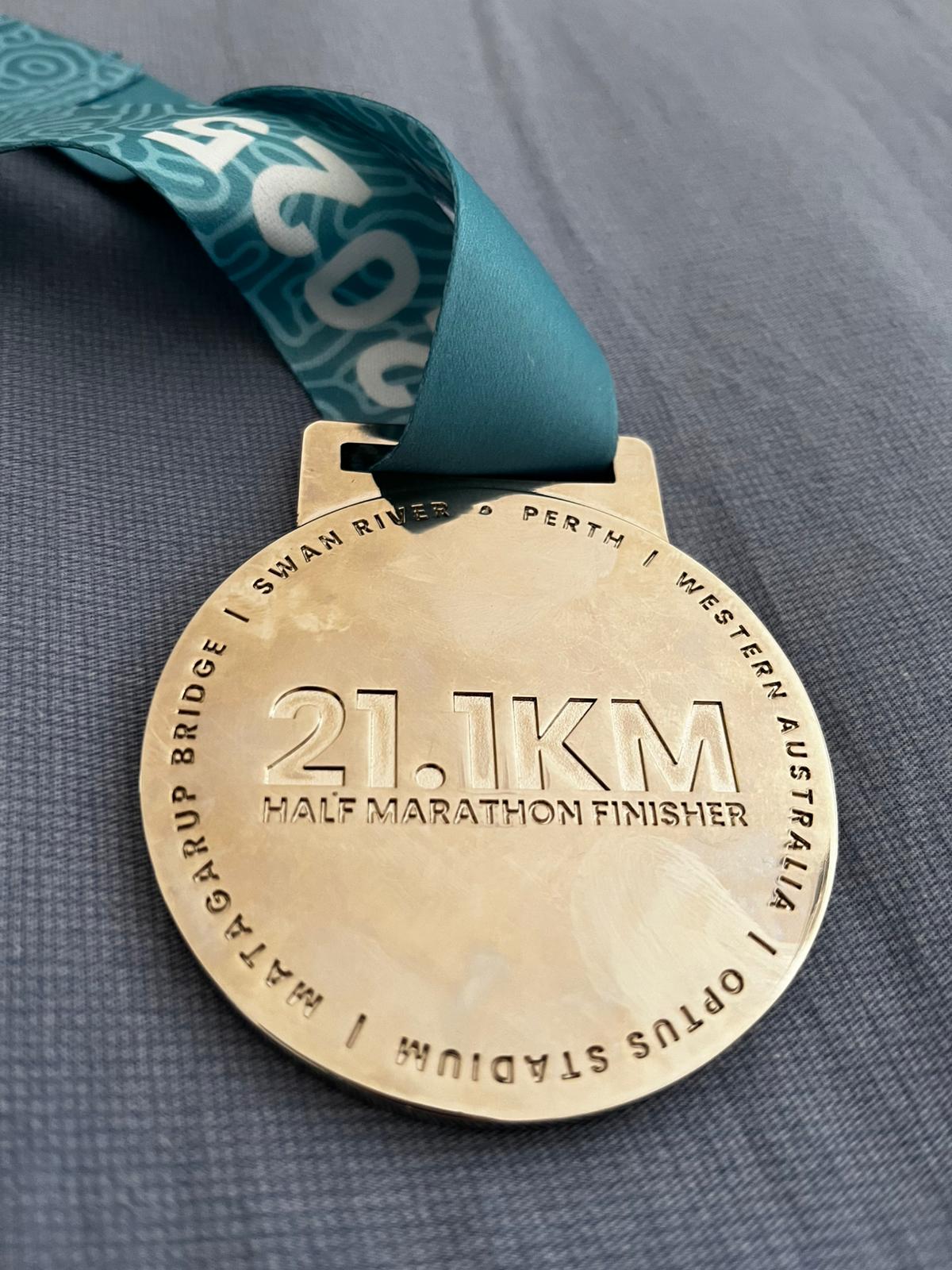
On 12 October, I did it — my first 21km half marathon.

From someone who hated running to someone who can’t imagine a week without it — it’s been an incredible journey.

Running has taught me the same lessons I’ve learned in business: start small, stay consistent, and never stop believing in progress.

– John Huang
Founder, Success Migration Australia
Read more
Migration Blog

How Does Skill Select Work?

Skill Select is a three-stage process that involves:

1. lodging EOI,

2. receiving an invitation to apply, and

3. Lodging a visa application.

The GSM visa program uses a point test system. Once you submit the EOI form, the system ranks your position according to your score and the date of effect. You can see a point summary after submitting the EOI, but you won’t be able to see your ranking position, as it changes all the time. Once you have submitted your EOI, it will be stored in the system and remain valid for two years unless you withdraw it or miss two invitations. Immigration Department will also remove your EOI if you are granted a permanent or provisional visa.

Read more
Migration Blog

Proficient English: IELTS VS OET

Applicants for GSM skilled migration must have COMPETENT English language proficiency. Additional points are awarded to applicants with better English language skills as below:

English Level Points Awarded
Competent English 0
Proficient English 10
Superior English 20

To claim 10 points for having Proficient English, applicants must sit a prescribed language test to demonstrate their English-language proficiency. There are no exceptions to this requirement.

Read more
Migration Blog

Changes to Accountants Skills Assessment Criteria from 1 July 2015

**IMPORTANT ALERT: NEW IMMIGRATION REQUIREMENTS FOR ACCOUNTANTS**

From 1 July 2015, new changes will be introduced by skills assessment authorities CPA Australia/CA  which may affect you if your nominated occupation is in the accounting area.

Please note, we have a confirmation from CPA Australia that the new changes also apply to those who has passed the provisional skill assessment for their 485 graduate visa.

Following is the news published on the CPA website:

(http://www.cpaaustralia.com.au/become-a-cpa/migration-assessment)

The changes to the assessment criteria will be implemented with effect from Wednesday 1 July. The total number of core knowledge areas will be consolidated to nine (9) from the current twelve (12):

Read more